You Hated the Film. Why Do the Makers Keep Calling It a Blockbuster?
You loved the trailer but hated the film. Now the makers are celebrating a “blockbuster,” and you’re wondering what you missed. Did those huge collections actually make anyone rich? Behind the poster, the producer could be celebrating while the distributor counts losses.
By Eros Zooming

The Quick Zoom
- You hated it. Your ticket still counts. Collections include money from disappointed viewers too.
- Big collections don’t guarantee big profits. Cinemas keep a share, and making and promoting the film costs money.
- A flop can still make its producer money. Rights sales may recover the producer’s costs while the distributor loses.
- The celebration is still selling tickets. Someone seeing that poster hasn’t decided whether to watch yet.
The Saturday Night Illusion
You rallied friends, paid for premium seats, and gave the film three hours of your weekend. At intermission you checked the time. By the credits you were already deciding you should have waited for streaming.
Then you opened social media on Sunday. Record collections. Confetti. Historic opening. Someone in the group chat asked the obvious question: “How is this a hit?” Debate followed. Screenshots of empty seats appeared. The film had already taken your money. Now it was taking more of your attention.
Negative chatter, fan wars, and debunking threads still count as engagement. Algorithms amplify the conflict, keep the title visible, and turn frustration into free advertising for fence-sitters.
A collection figure does not measure how many people liked the film. It measures how many people paid before they saw it. Ticket pricing further distorts the picture: a ₹400 multiplex seat contributes far more to the gross than a ₹150 single-screen ticket. Rising numbers can reflect dynamic pricing as much as growing popularity.
Why the Party Never Stops
If word-of-mouth is mixed, why do makers keep hosting success meets?
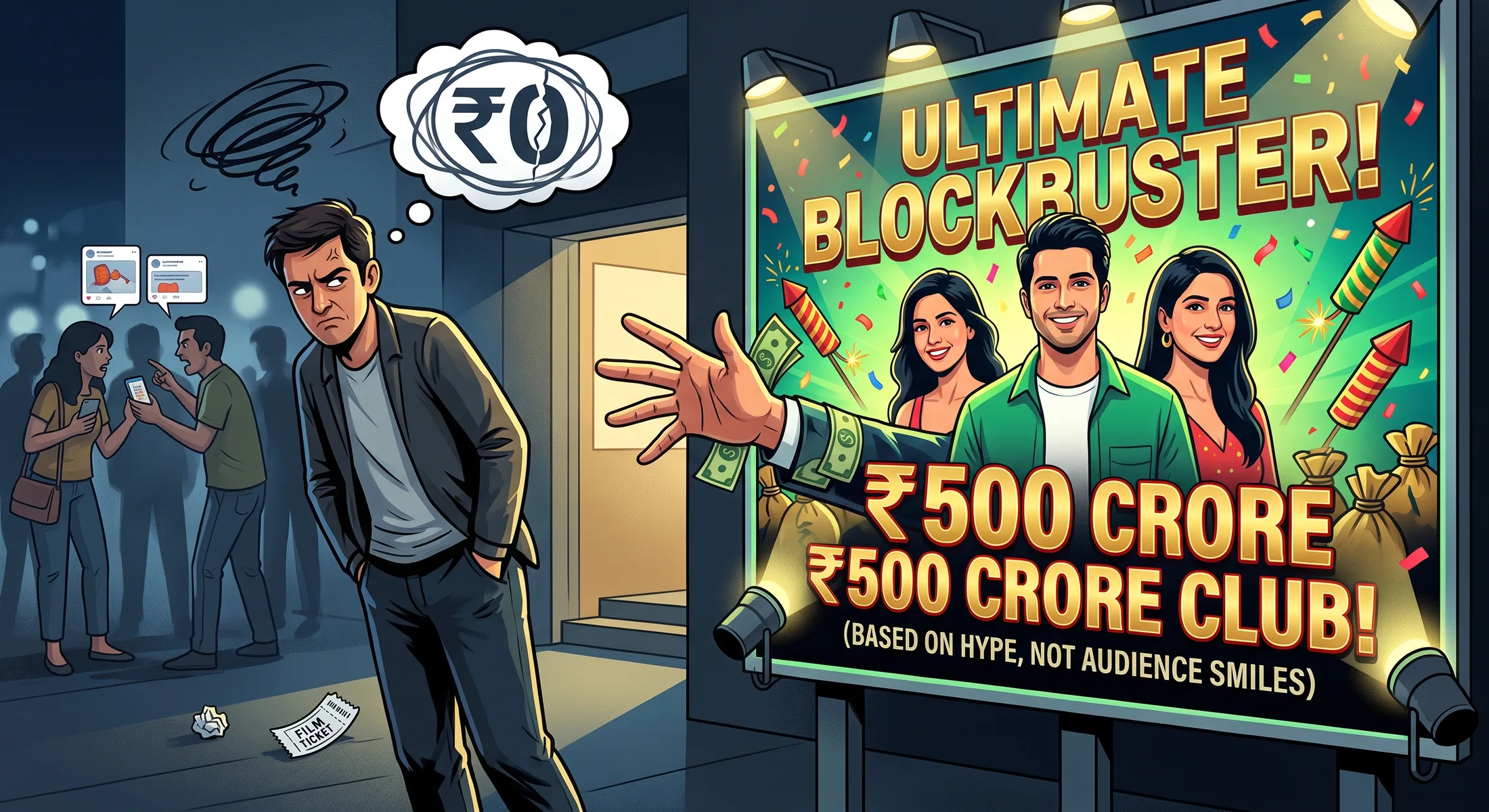
Because the campaign is not over. You already paid. Your colleague has not. A bold celebration graphic and videos of cheering crowds can create just enough doubt to push a hesitant viewer toward booking a ticket “to judge for themselves.”
Celebration posters are promotional bait, not historical records.
In early June 2026, the Telugu film Peddi arrived with high expectations. Initial reviews were mixed, yet producers quickly highlighted Ram Charan’s biggest worldwide opening day (reported above ₹135 crore) and framed the film as an unmissable family spectacle. Later trade discussions revealed a more uneven picture: strong pockets in Andhra Pradesh, but weaker performance in Telangana, the Hindi belt, and overseas. A casual viewer seeing only the celebration graphics would never notice the geographic split. Regional distributors carrying the risk certainly did.
Gross, Nett, and the Producer–Distributor Split
Follow the money from your ticket.
Statutory taxes are deducted first, producing the nett collection. The exhibitor (theatre) then takes its contractual share often 40–50% in the opening week, higher later. What remains is the distributor’s share.
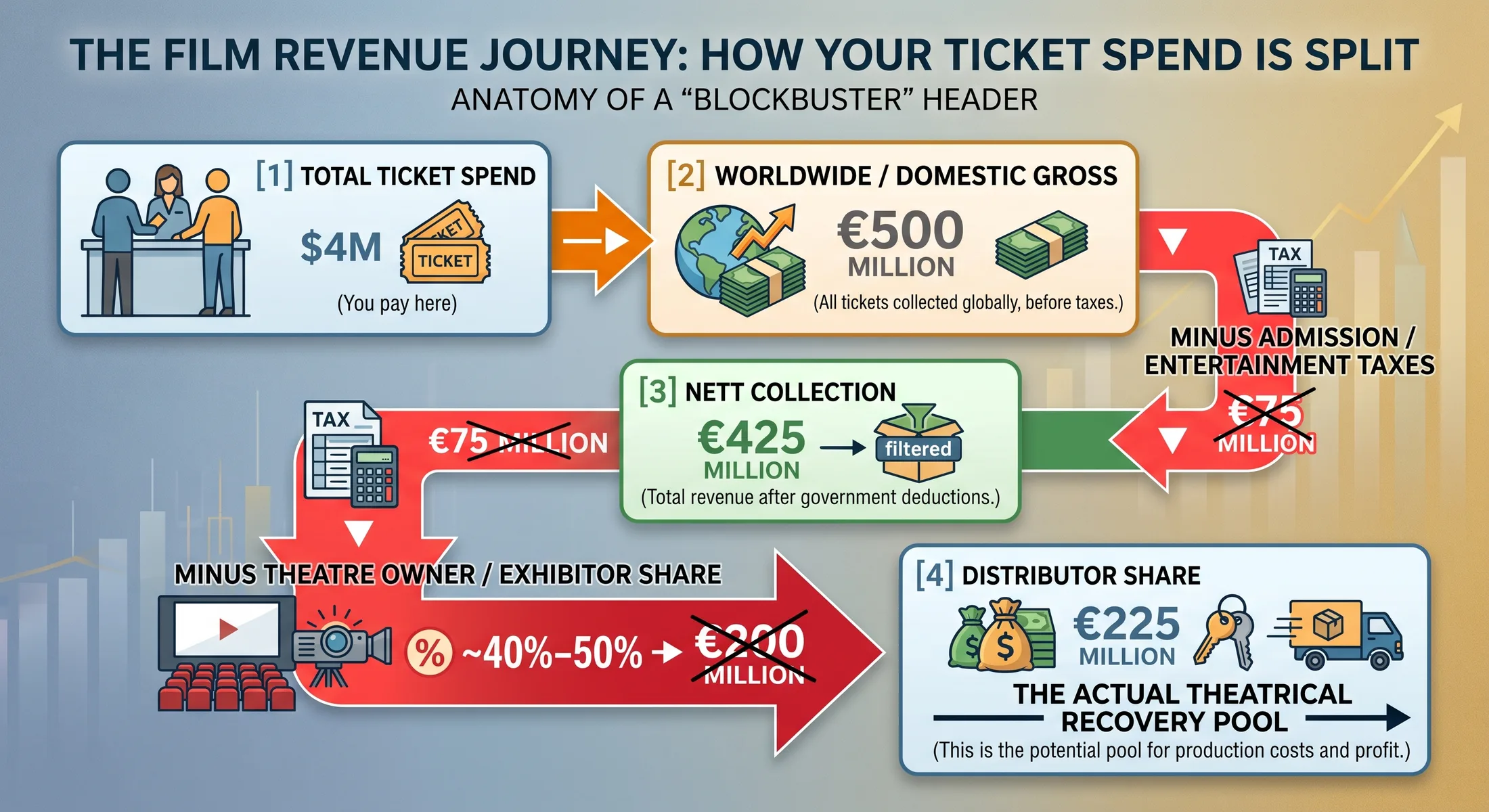
A widely advertised ₹100 crore gross can leave only ₹35–40 crore flowing back into the distribution chain.
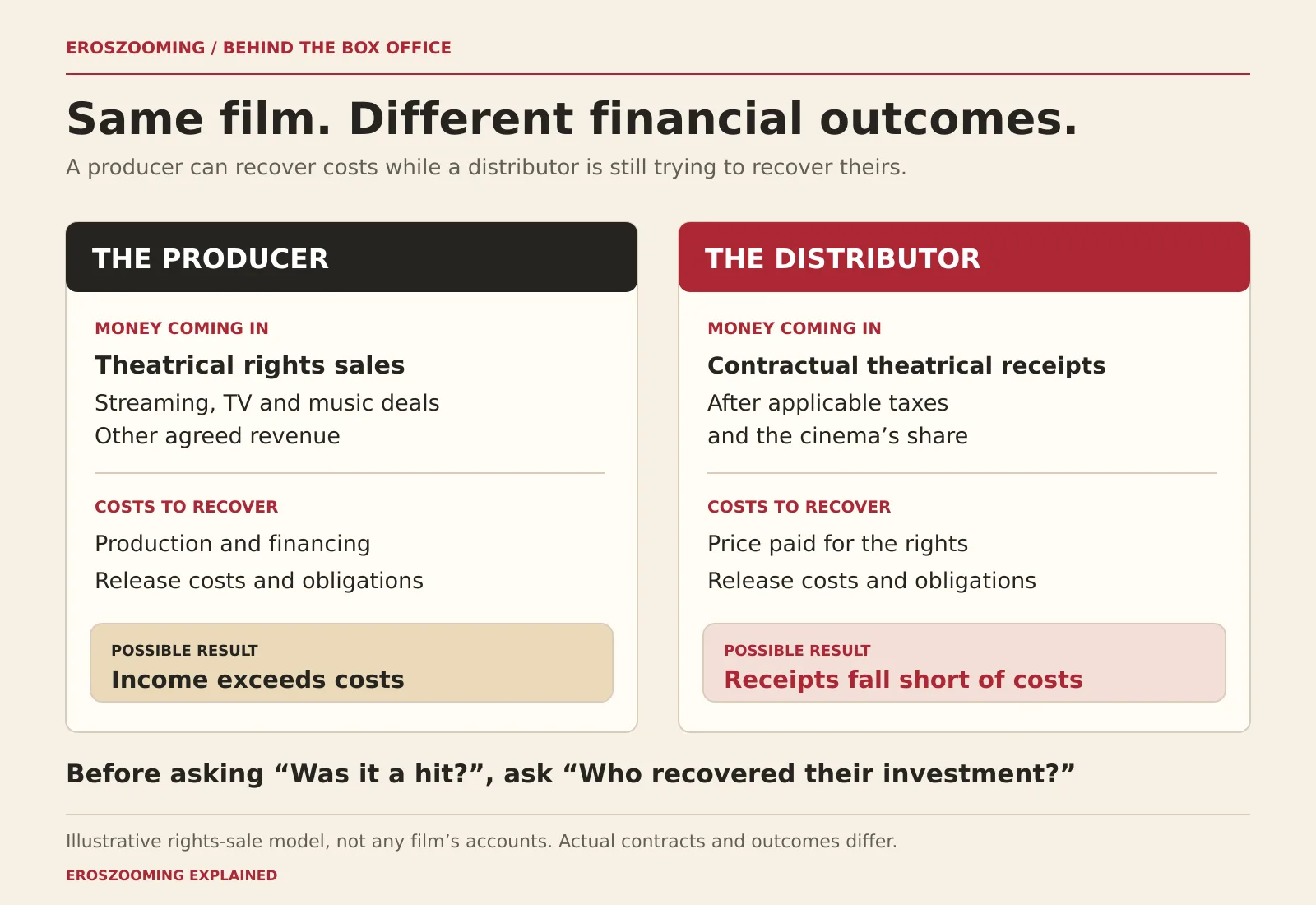
Producers frequently sell theatrical rights to third-party distributors on a minimum-guarantee or outright basis long before release. They separately monetise satellite, streaming, and music rights. Through these pre-sale deals, the producer can secure a profit margin before a single ticket is sold. The distributor who bought the theatrical rights is left needing a strong, sustained run simply to break even.
A clear example is Half Girlfriend (2017). Trade reports put the all-India theatrical rights sale to NH Studioz at roughly ₹41–42 crore. Non-theatrical sales and the advance insulated the producers. When theatrical business slowed, the distributor absorbed the shortfall. Both parties were telling the truth from their own balance sheets: the production was profitable; the theatrical release was not.
The Hollywood Accounting Paradox
Even without regional middlemen, “profit” remains elastic.
Harry Potter and the Order of the Phoenix grossed approximately $938 million worldwide. A 2010 leaked profit-participation statement, however, showed the production carrying a paper deficit of more than $167 million. For audiences who filled theatres, the idea that a near-billion-dollar film “lost money” felt absurd.
The distinction matters. A net-profit statement prepared for talent is not the same as the studio’s operational results. Studios charge distribution fees, promotional overheads, administrative costs, and financing interest against the production ledger. These deductions can wipe out contractual “net profits” even while the studio earns substantial revenue from distribution fees, licensing, and merchandising.
What to Keep in Mind
The next time a group chat argues over whether a divisive film is truly a “blockbuster,” separate the layers:
## You are judging artistic satisfaction and value for time.
## A fan may be defending identity and celebrating raw gross volume.
## The producer is often counting pre-sales and recovery guarantees.
## The distributor may be writing off a territorial loss.
These perspectives do not cancel one another out. They simply operate on different balance sheets.
You do not need audited ledgers to know whether you enjoyed a film. Your reaction is valid the moment the house lights come up. When the next massive collection poster appears in your feed, remember what it actually is: not an artistic report card, but a sales pitch still asking people to buy tickets.